
Timber Fencing in Sunbury
Select Fencing Sunbury builds timber fences across Sunbury and nearby towns: paling boundaries, pickets, slat screens and post and rail, in treated pine or hardwood. We'll take your old fence down and off to the tip. We're fully insured, Google reviewers rate us 5.0, and the written quote costs nothing.
Free timber fence quote
Timber paling fencing is already selected.
What you get with timber
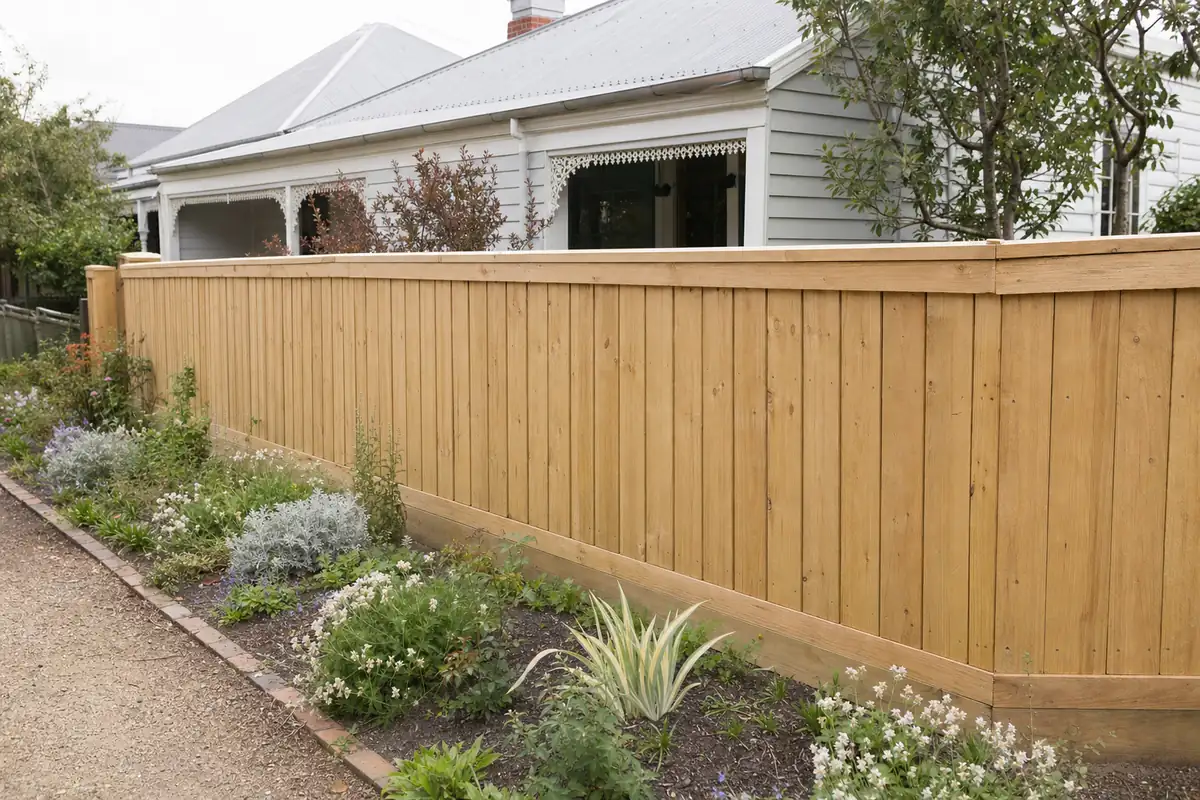
With a timber paling fence, narrow upright boards called palings are nailed to two or three horizontal rails running between posts. In a lapped fence the palings overlap so no gaps open up. A capped fence adds a timber rail over the top to shed rain from the cut ends.
Get a free quoteYou pick the timber.Pick the timber for the palings, and we'll quote in that timber.
Posts go in concrete.We set treated pine, hardwood or steel posts in concrete, behind the palings.
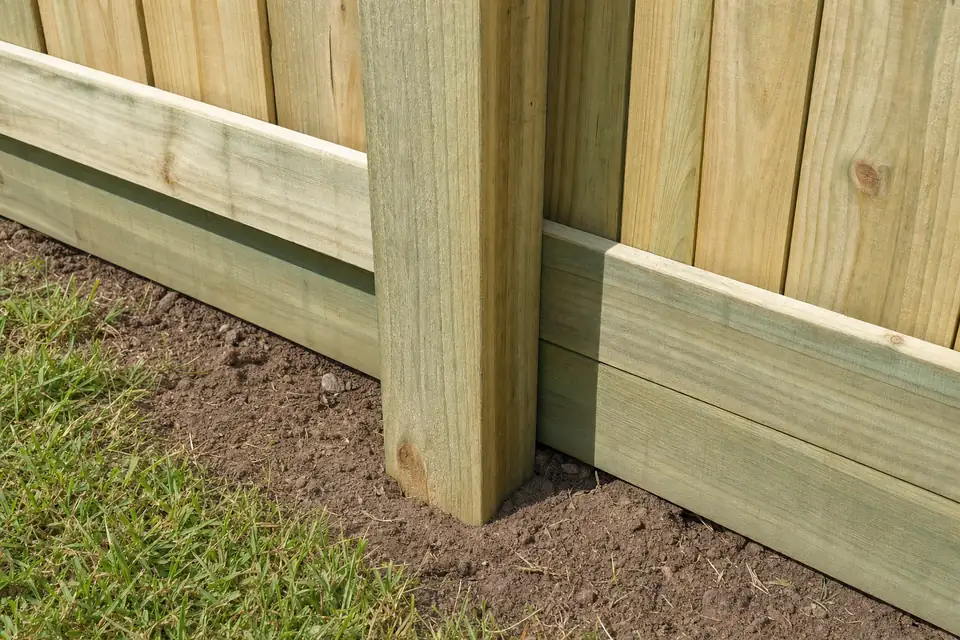
A plinth can run along the bottom.A plinth is a board laid along the ground, closing the gap under the palings.
Stain or paint can be added.We can stain or paint the fence once it's built.
Wide gates get a steel frame.Timber gates across a wide opening are built on a steel frame so they hold their shape.
Broken bits get fixed.We replace palings, rails, plinths, capping and posts on a fence that's otherwise sound.
Timber fence styles
Paling fences come in four common styles, set by how the boards meet and what runs along the top.
Butted
Palings sit edge to edge. Timber shrinks as it dries, so small gaps can open between the boards over time.
Good for: back boundaries where a little daylight between boards won't bother you.
Lapped
A second layer of palings covers the joins in the first, so it stays solid as the timber shrinks.
Good for: privacy on any boundary.
Lapped and capped
A lapped fence with a capping rail over the end grain, meaning the sawn ends at the top of each paling.
Good for: a finished top edge that sheds rain.
Exposed post
The posts stay in view on the face of the fence, not hidden behind the palings.
Good for: front and side fences where you like the posts on show.
Building in an estate with fence rules? Put its name in the notes so the quote follows its guidelines.
Get a free quotePine, hardwood and posts
No Australian Standard grades fencing timber, so quality varies from supplier to supplier.
Treated pine is graded by hazard level: H3 is treated for outdoor timber kept off the ground, and H4 for timber set in the ground.
Hardwoods are rated by durability class, and Class 1 lasts longest outdoors.
Steel posts under timber
- Rather keep timber out of the ground? We set steel posts and fix the rails and palings to them.
| Part | What the guide suggests | Why it matters |
|---|---|---|
| Posts | What the guide suggests: H4 treated pine, or a Class 1 or 2 hardwood | Why it matters: They stand in the soil. |
| Palings, rails and capping | What the guide suggests: Treated pine to at least H3, or a Class 1 or 2 hardwood | Why it matters: They're clear of the ground. |
| Plinth | What the guide suggests: H4 treated pine, cypress or a Class 1 hardwood | Why it matters: It touches the soil along its whole length. |
| Nails and screws | What the guide suggests: Hot-dip galvanised or stainless steel | Why it matters: Plain steel rusts and stains the timber. |
Source: Timber Queensland: Residential Timber Fences (PDF) (opens in a new tab)
Plinths, capping and finishes
Plinth boards
The plinth runs along the soil under the palings, so the palings stay clear of the dirt.
Capping
The capping rail covers the tops of the posts and palings, with its top sloped so rain runs off.
Stain or paint
Left unfinished, timber fades to a silvery grey, and it may split or twist. Timber Queensland says a quality light-coloured paint protects it best, and warns dark film-forming finishes can speed up decay.
Pickets, slat screens and post and rail
We also install timber fences for front yards, outdoor areas and paddocks.
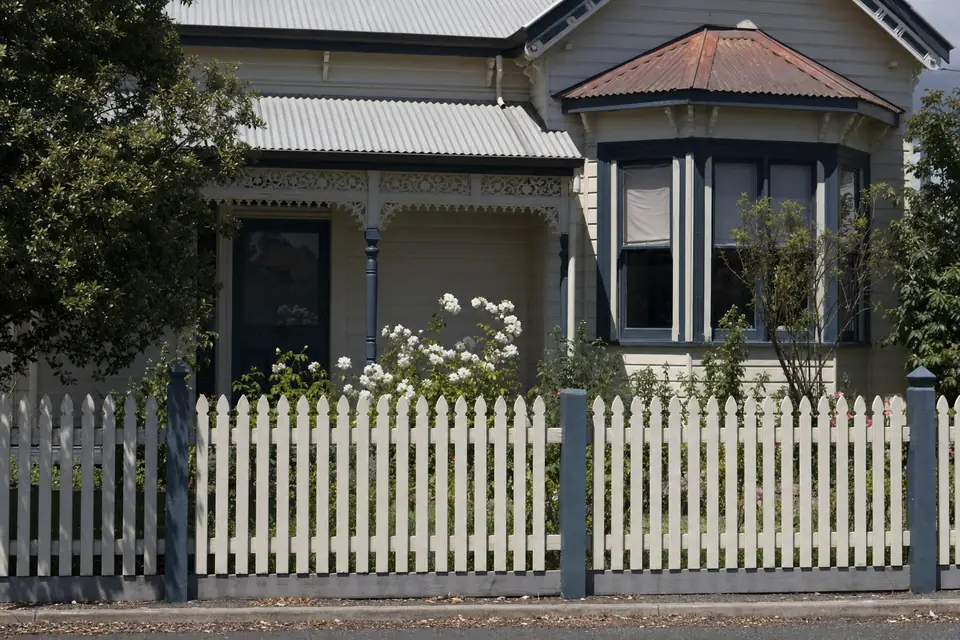
Picket fences
Spaced pickets on a low front fence suit older homes. If your home's under a heritage overlay, a fence people can see from the street needs a planning permit. You'll need to apply for it yourself. Sunbury fence rules
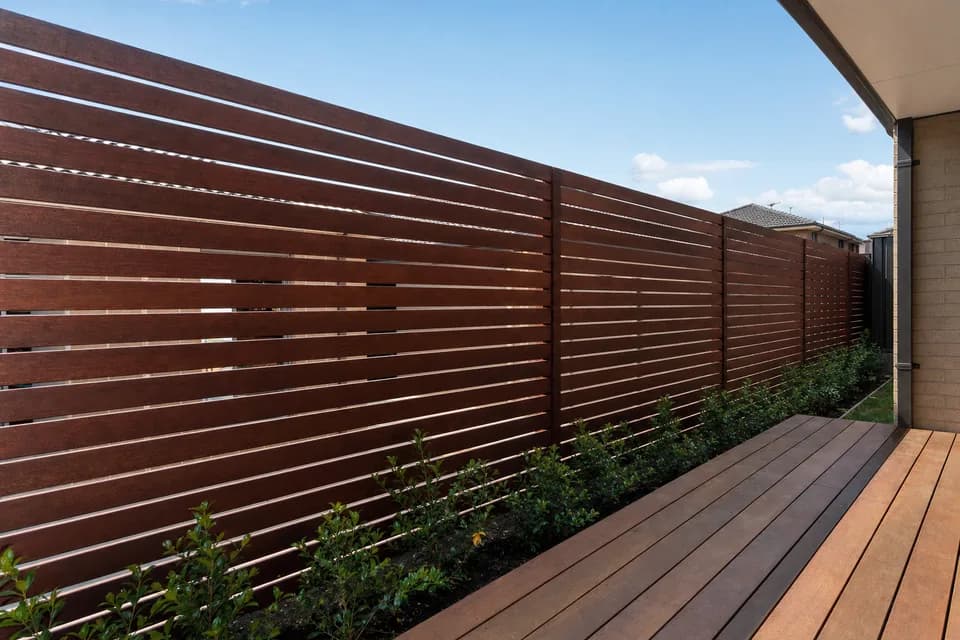
Slat screens
Horizontal slats with small gaps, in treated pine or merbau, a dark reddish hardwood, for screening an outdoor area or front yard.
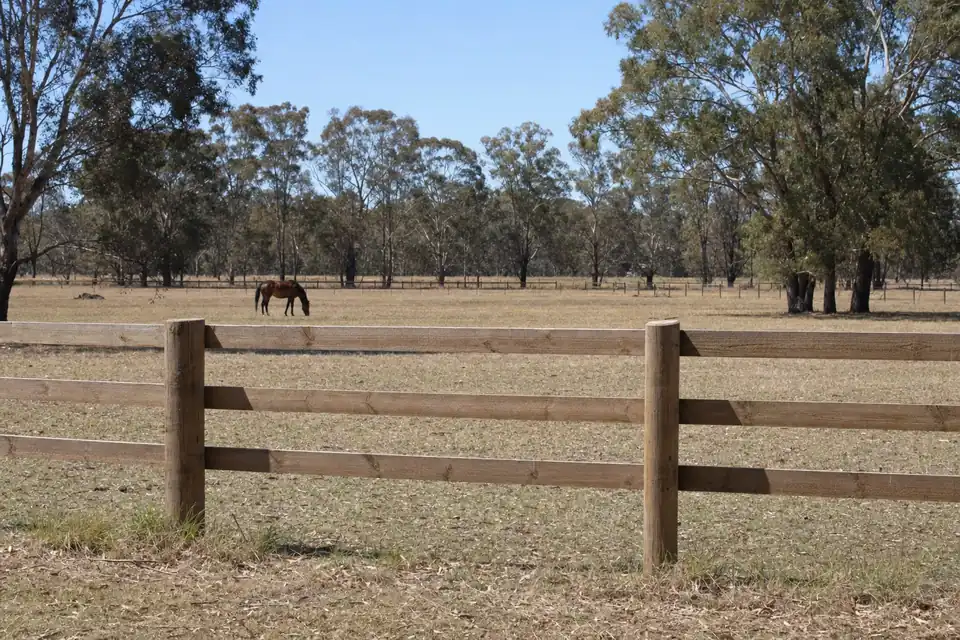
Post and rail
Posts with two or three rails and nothing between, for acreage and horse paddocks out toward Bulla and Diggers Rest.
Timber fence costs
Your price starts with the length of the fence, then these things change it.
- Height
- A fence up to 1.2 m takes two rails, and a taller one up to 1.8 m takes three.
- Style
- Lapped uses more palings than butted, and capping adds a run of timber along the top.
- Timber
- Higher grades of timber cost more, and hardwood is priced differently from treated pine.
- Finish
- Staining or painting is extra work once the fence is up.
- Ground and access
- A slope, rock in the post holes or a narrow way in all add time.
- Your neighbour
- Neighbours normally split a boundary fence 50/50. If you want it taller or dearer than a sufficient fence, meaning a standard one for the area, you pay the extra. Boundary fences and neighbours
Rules to check first
Several Sunbury estates ask for timber, and each sets its own limits.
Estate guidelines
Everley, Kingsfield and Maplestone each set the paling style and height for side and back fences. New estate fencing
Height without a permit
In Hume, a side or back fence up to 2 m doesn't need a building permit. Close to the street, the limit is 1.5 m. Sunbury fence rules
Rules change between blocks and between estate stages. Confirm yours before you book.
Timber fencing questions
Estates and council set different limits block by block. Ask Hume City Council or your estate about yours.
Get a free quoteLapped means the palings go up in two staggered layers. Capped means a rail is fixed along the top. Kingsfield and Maplestone both ask for capped timber palings.
Source: Kingsfield design guidelines (PDF) (opens in a new tab)
Choose by where the timber goes. Posts sit in the soil, so they need H4 treated pine, a Class 1 or 2 hardwood, or steel. Palings, rails and capping stay clear of it, so H3 treated pine or better and a Class 1 or 2 hardwood both work there. The look and the price decide.
Source: Timber Queensland: Residential Timber Fences (PDF) (opens in a new tab)
Usually, yes. Victoria's Fences Act 1968 has you and next door split the cost 50/50 for a plain dividing fence, meaning the fence along your shared boundary. For houses, the state's example of that basic fence is 1.8 m timber palings. Anything beyond it, like extra height, capping or a stain, is paid for by whoever wants it.
Source: Victorian Government: Fencing in Victoria (opens in a new tab)
Yes. Timber Queensland's guide puts quality light-coloured paint first for protecting a timber fence. It says stains do a reasonable job, depending on the colour. Clear finishes need recoating often.
Source: Timber Queensland: Residential Timber Fences (PDF) (opens in a new tab)
Often, yes. A few new palings, a fresh post or a leaning run pulled back to straight is a normal repair job. New timber looks lighter than the old boards until it weathers.
We'll knock it down and cart it off to the tip. Just mention it in the form notes. Don't burn old treated palings. CCA treatment uses copper, chrome and arsenic, and the NSW EPA warns its smoke and ash carry high levels of arsenic.
Get a free timber fencing quote
Tell us the style, the timber and about how far the fence runs. Unsure on style? We can talk it through when we call.
- The quote's free, and there's no pressure to go ahead.
- Add a gate or a sleeper wall in the same request.
Rather talk to someone? Call (03) 9123 6479